
Concealing Emergency Tools in Everyday Objects
Disclaimer: This article is for educational purposes only. The techniques discussed are presented to encourage critical thinking about preparedness and personal security. We do not recommend attempting to conceal prohibited items or violate any law, policy, or security procedure. Never carry sharp objects or anything that could reasonably be considered dangerous without proper authorization. If you choose to experiment with any concepts discussed here, you do so entirely at your own risk and accept all responsibility.
Let me also preface this article by saying oftentimes the “good guys” get their techniques from the “bad guys”. Any tool can be used for good or ill. There are no secrets, only things that are not yet known to you. If you haven’t thought through this before and are uncomfortable with the implications feel free to stop reading here.
Context matters, so here is the situation. You’re a journalist who is set to interview a billionaire who resides in Dubai. He has a reputation for being paranoid so his security is very tight. This includes a body scanner and luggage scanner that he has acquired, such as the ones you find in airports and he’s recruited a former agent with experience in reading these images. Not this particular person, but another person of similar power and status had illegally detained and dispatched a journalist and you don’t want to end up being like that person. You also don’t want to walk into the situation without any backup plan.
There may come a day when you find it important to have the ability to conceal a small object on your body. The Escape & Evasion pocket on our Undertac underwear were designed with this in mind, though in this context it would not be effective due to the nature of the equipment being used. Most people don’t give tradecraft too much thought, in fact elements of tradecraft are probably some of the most frequently utilized skills that are all but ignored by your average person. Tradecraft being defined as skills and methods used by people who work for organizations involved in secret activities such as intelligence and spying, at least according to the Cambridge dictionary. You’ll often find most people focused on weapons training, even less so on medical training, which is arguably far more important, and then even less so on tradecraft. Now this subject is beyond broad, as it encompasses a vast number of skillsets; however, we’re narrowly focusing on how to conceal a ceramic razor which is a tool that can be used as a last-ditch effort to remove illegal restraints.
You’ve likely seen these ceramic blades before, we sell them HERE. The dimensions are quite small 1.22" L x 0.39" W x 0.028" T. They are made from zirconia, a ceramic material that contains no metal, which means it is non-ferrous, which in-turn means it is undetectable by metal detectors. Something like this could be easily sewn into clothing, or hidden many different places. Covering the bevel edge with a piece of substantial tape or plastic is a good idea so it does not cut things that it should not cut. There will be future articles of all the creative ways to conceal this ceramic implement, again, it’s not recommended you do this, but it is nice to be aware of this information.
Since, in theory, a zirconia object will not set off a metal detector then getting it through one should be an easy task. The object would just have to be concealed from sight and also be able to evade a cursory search by human hands. In the aforementioned journalist context, there are a different set of challenges. Hiding it in clothing won’t work. Hiding it on your body likely won’t work. The image scanners flag any metallic and non-metallic items between clothing and skin. Hiding it in your body could possibly work, as of 2009 The Sydney Morning Herald had reported these scanning machines couldn’t detect things inside the body, just the outer contour of the body. Reader’s Digest as of a few days ago reported the same in reference to concerns about tampons. So, the old cigar tube trick could potentially work in this scenario, however, there is no guarantee you won’t be cavity searched by the paranoid billionaire’s security team also, it might be more than a little uncomfortable. Highest likelihood then involved stowing it in or on a pre-existing object to hide the shape of it and allow it to appear as it is part of that thing so as not to raise suspicion. Due to the nature of the shape of it, putting it in something organic is a no-go, plus you’ve only been allowed to bring what you would normally wear and one bag of common electronics which you would normally use in the course of your work.
The journalist’s best bet is shielding and camouflage.
The Watch
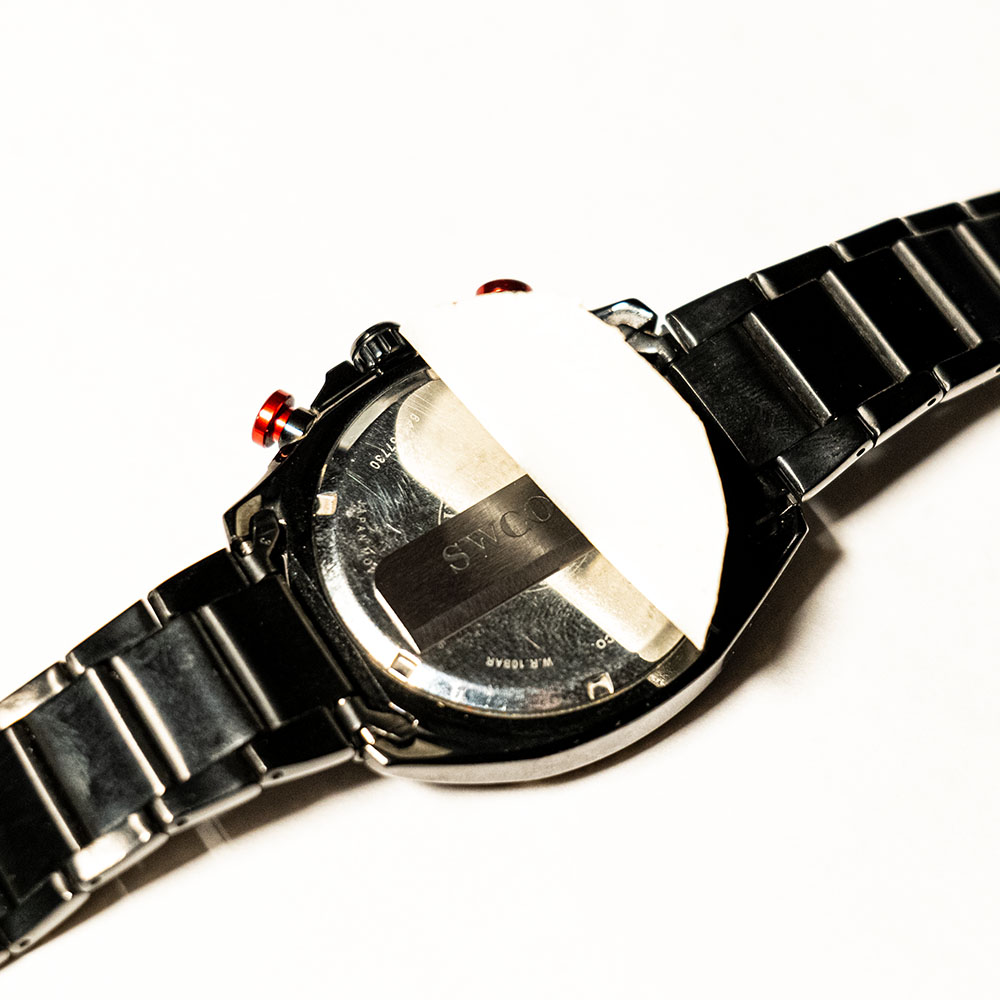
It’s a commonly worn item that does not raise suspicion and it is often allowed to be worn during a body scan. Taking the item and using a piece of gaffers tape cut to roughly match the case back, the part of the housing that faces your wrist, allows you to easily affix it.
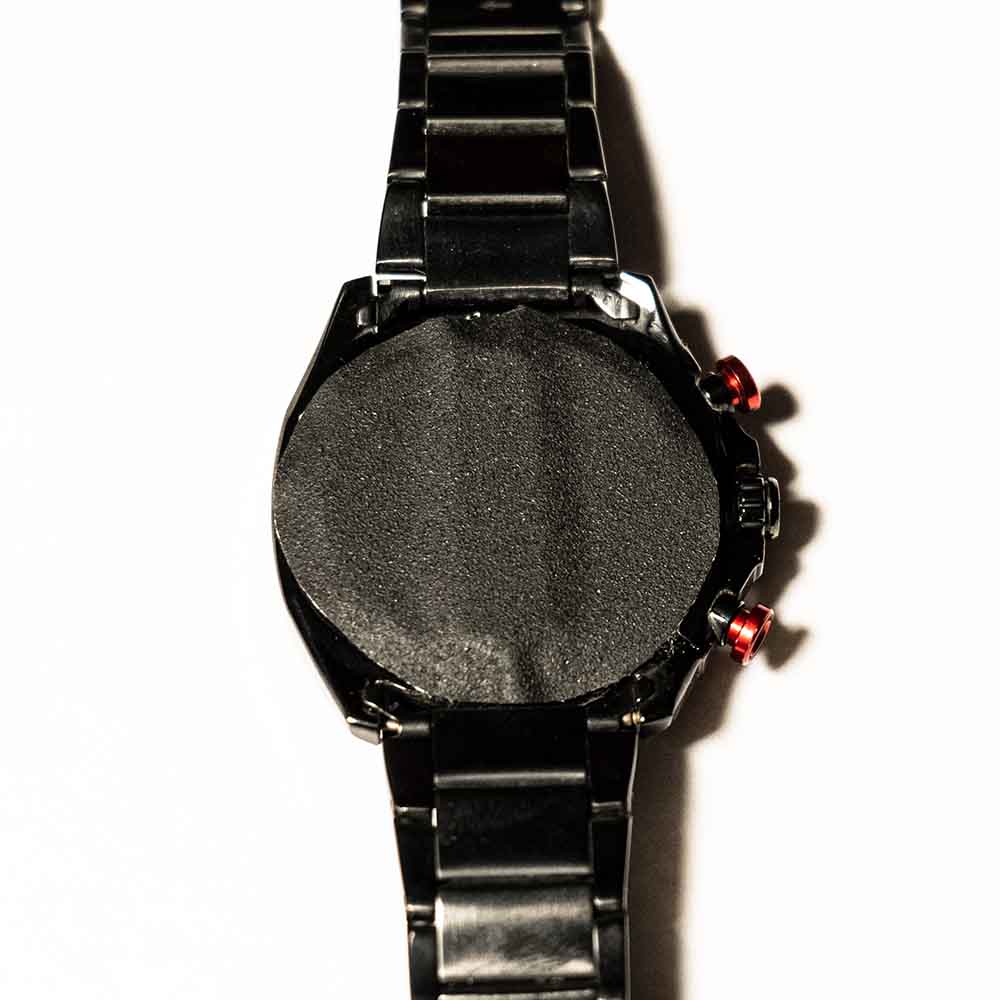
The watch, if worn during the body scan procedure, will show up as only what it appears to be, if scanned with the other tool it should show up as a solid object as well, but there are enough parts within the watch to diffuse any outline of the zirconia item should a scan show a more layered detail. A watch would ideally have a metal band that stays looped when unclasped and the item would be oriented along the band, not perpendicular to it. If it were perpendicular, it is not as well concealed to scanning, the band will shield the shape of the item more so. If your watch is removed and put through the luggage scanner having the watch face up and snugly placed so as for it to not be flipped over would be wise. If allowed to, placing it in your briefcase, backpack, or messenger bag next to other items and in a place where it can’t be easily viewed with the naked eye is even better. If the billionaire’s security team chooses to inspect your watch by hand be prepared for a rough interview.
Cell Phone
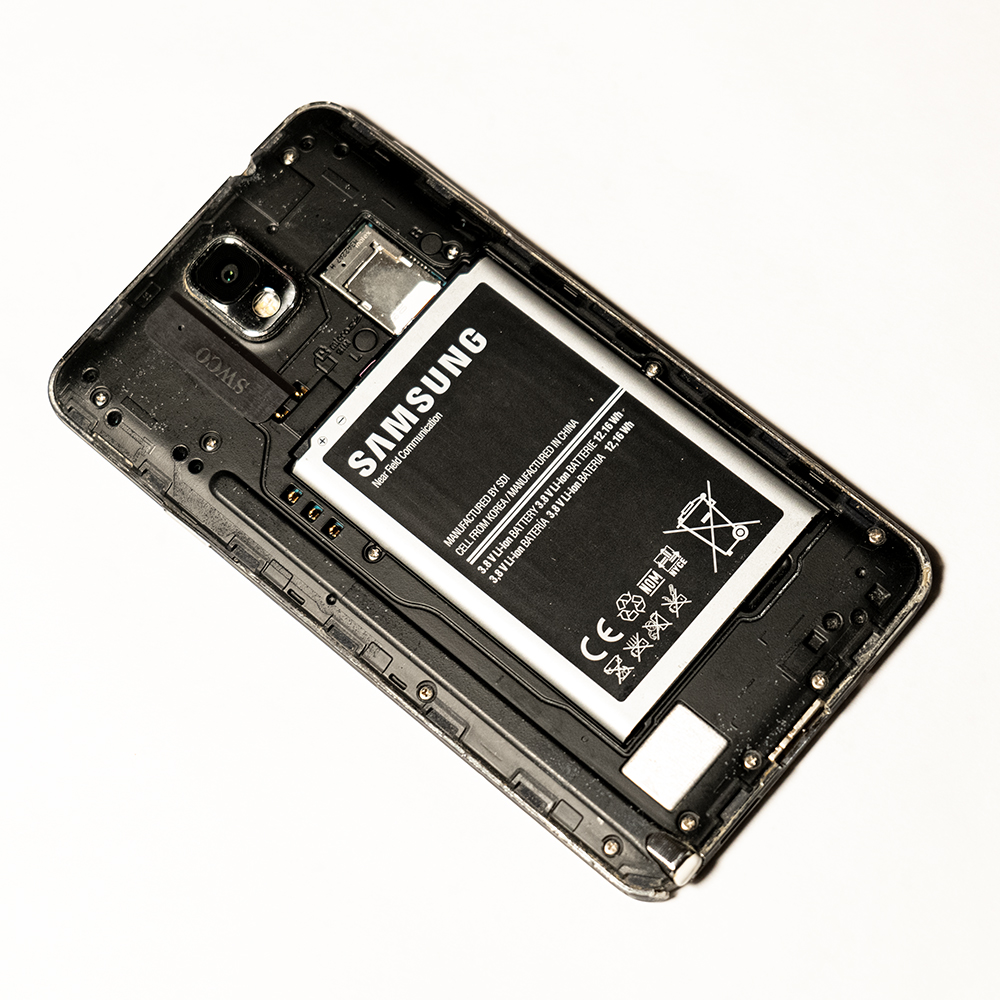
This object could work in a couple different ways. Either internally or externally. It used to be that your cellphone could be opened by the end user, in more recent years that has changed as now more manufacturers are making them watertight. Additionally, there is probably some planned obsolescence here as they don’t want to allow consumers the ability to change out their cell phone battery for a fresh one themselves and would rather they be forced to upgrade to a newer model. If the cell phone is a model that comes apart like the one in the picture it could be stowed inside pending it does not impede the function of the phone.
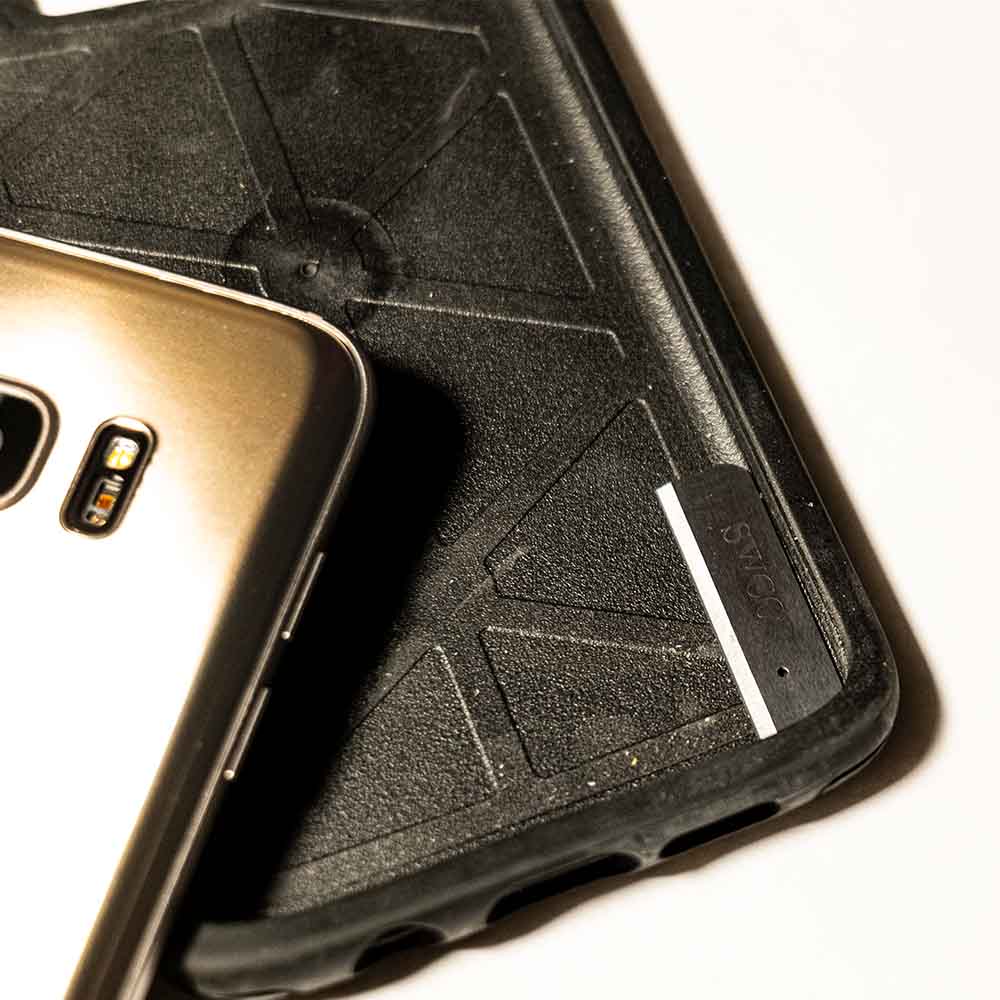
The other option is between the phone and a protective phone case. Obviously you would need a case that allows clearance for the object without making the phone/case appear suspicious, it would have to be a non-transparent case, and one that would be enough of a hassle for the security team to remove so as to not make it worth their while, but not so much of a hassle that you couldn’t retrieve the item readily. The internals of the cell phone are similarly shaped so if any outline shows up on a scan it would appear to belong in that context.
Laptop Computer
Similar to the cellphone but obviously large in stature. Some laptops can be more easily disassembled than others. They contain different chips and metals in various shapes so the item could be easily camouflaged in any scan here. Oftentimes to take off the cover of a laptop a screwdriver, torx screwdriver, or shim type separator is needed, sometimes all three. Anything with tools is not a good choice because you need to recover the item. Having it under a 3D type bubble sticker could work or hiding it within a battery compartment could work if it is easily accessible. If there is a vent on the unit you could perhaps hide it in the vent with a piece of tape as a pull tab for retrieval, but this could easily raise suspicion if it is closely inspected.
Portable Power Banks
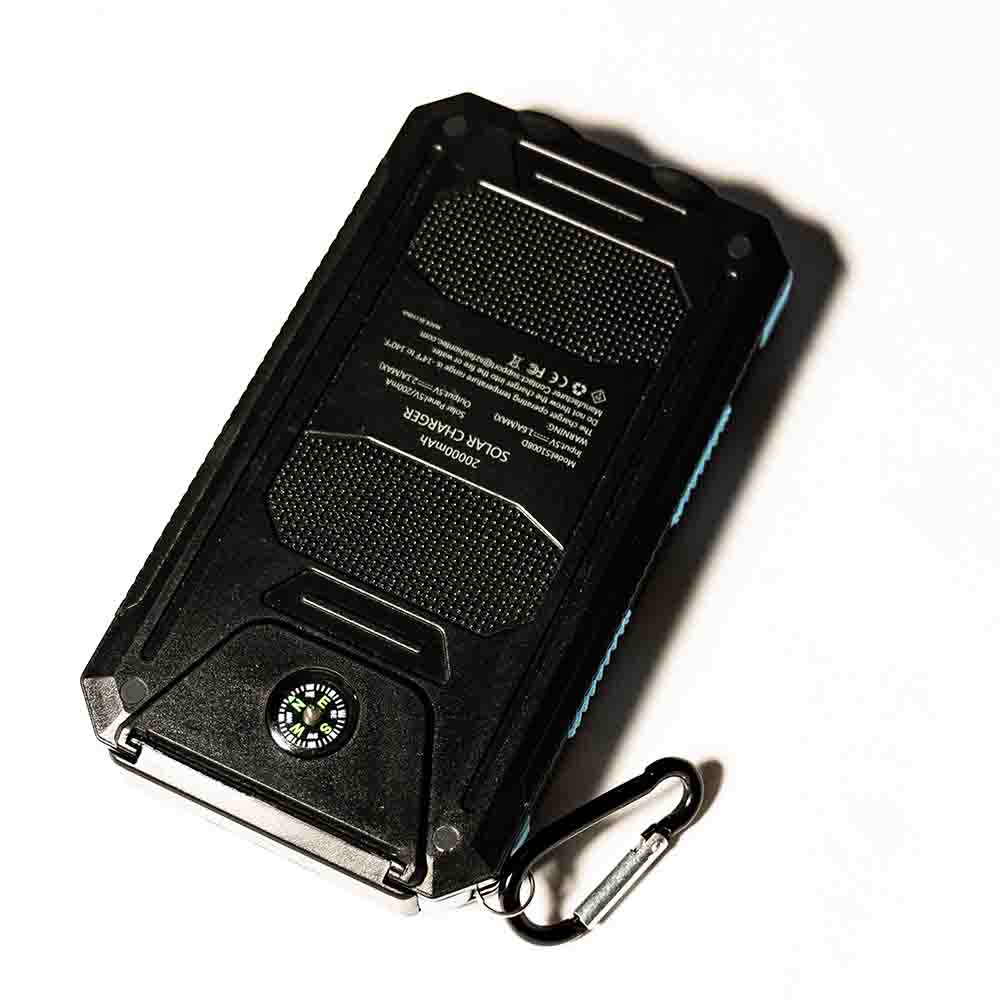
Portable chargers have become quite common. Using these to charge your cell phone is not unheard of so it wouldn’t be out of place in this context. A lot of these have become quite sleek and minimalist, the sleeker the less easy it is to hide items, however if you have one such as the one pictured it could work.
This one has a flip cover to protect the USB ports.
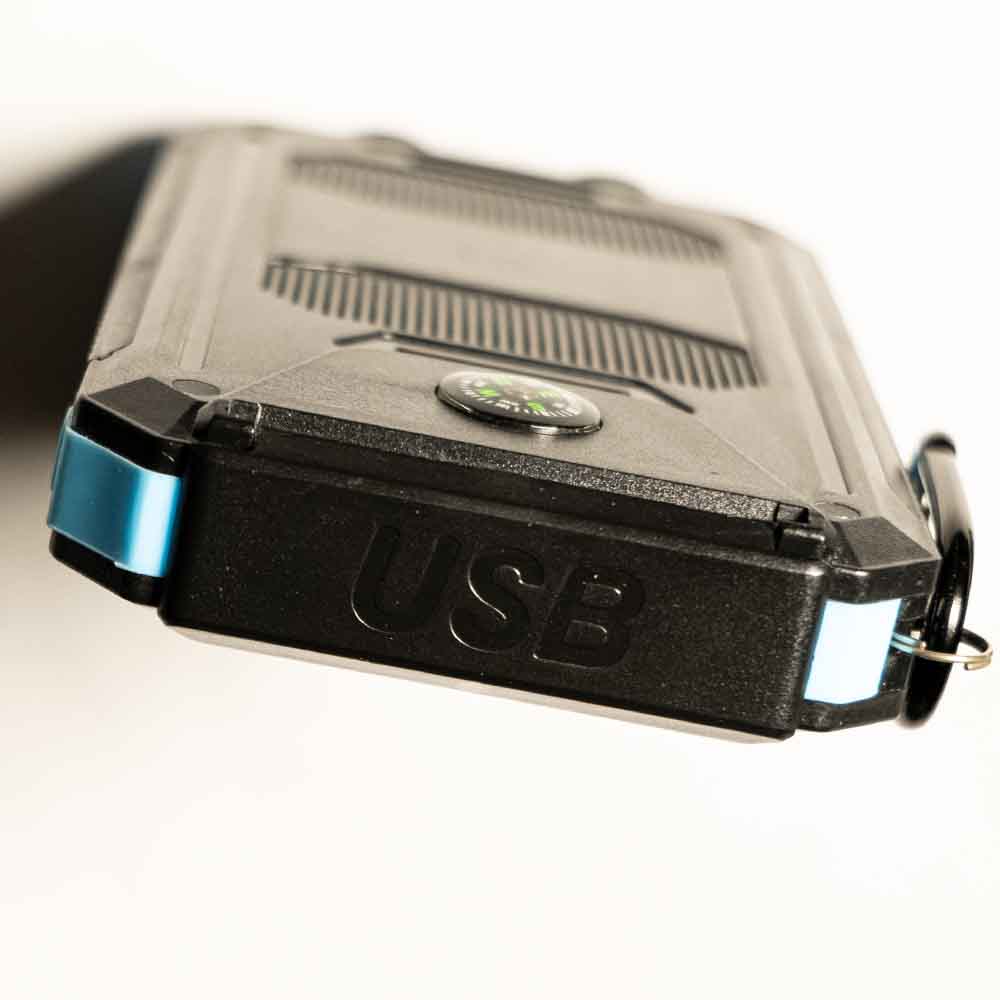
The ports are surrounded by a silicone rubber gasket. This gasket can be pulled up and slightly shaved down so as to conceal the item and still allow the cover to close. Or as pictured it can be just tucked behind the cover. Some material had to be removed from the back of this flip cover to allow it to close properly.
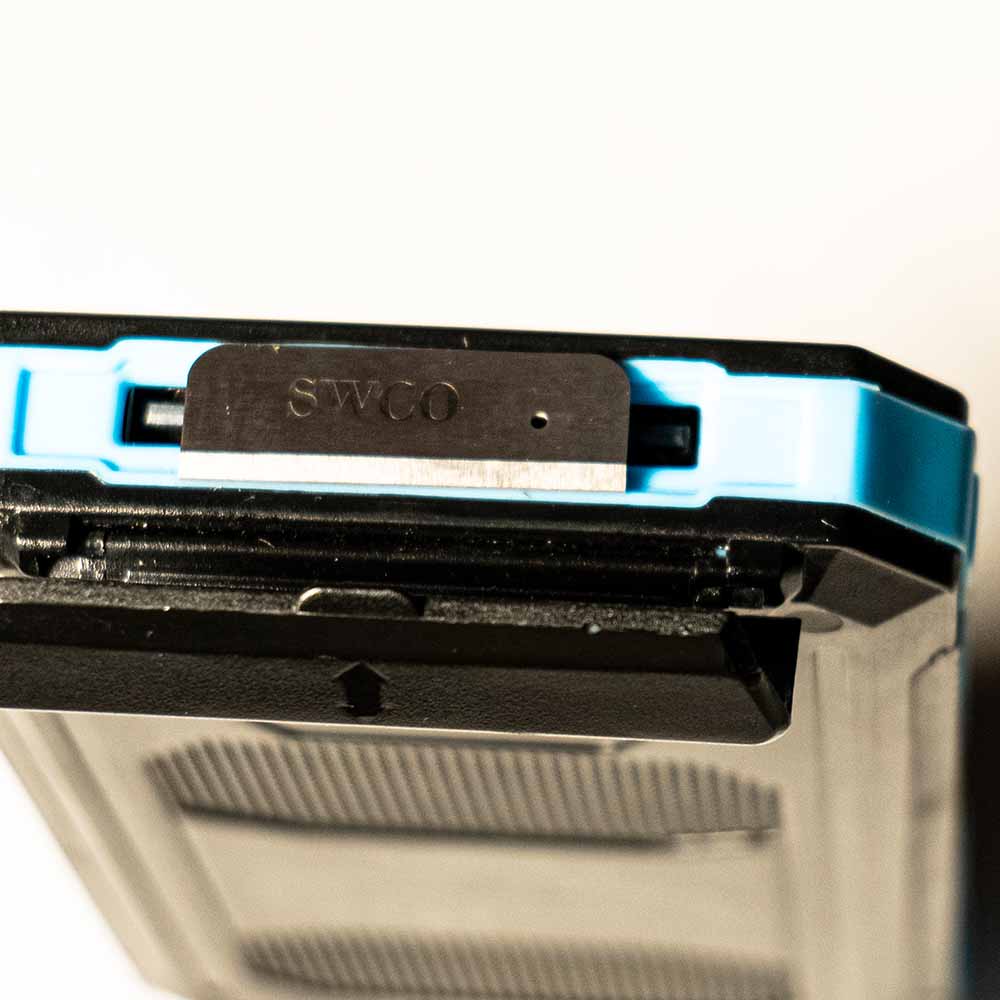
Scanned from any direction its shape follows the natural lines of the charger design so it would likely not raise suspicion.
Regardless of which method the journalist used he should ask to use the bathroom immediately post security so he could stage his implements. The best hiding spot doesn’t mean the most readily useable so transitioning these things to more convenient areas now that the scanners are out of the picture is important. A tool does you no good if you can’t retrieve it when it is needed.
These are a few things to get the mind working and there’s always going to be different techniques and technology which makes it an everchanging landscape.
Where Undertac Fits
While this article focused on concealment principles inside everyday objects, most people won't be facing advanced security screening. That's exactly why we designed the Undertac Infantry Escape & Evasion Pocket.
For normal travel and everyday preparedness, it provides a discreet location to carry emergency cash, communication tools, compact escape equipment where lawful, or other essential items without relying on a backpack or luggage that could become separated from you. Different situations call for different solutions. Preparedness means understanding those differences and planning accordingly.
If you'd like to learn more, be sure to read our guides on Concealing Communication Tools, Building a Discreet Emergency Kit, and Escaping Illegal Restraints: Duct Tape. Together they form a practical foundation for understanding modern preparedness and tradecraft concepts.
A Final Word
Knowledge is neither good nor bad. Like any tool, its value depends entirely on how it's used. Our goal is to encourage thoughtful discussion about preparedness, personal security, and self-reliance—not to promote unlawful behavior or bypass legitimate security measures. Stay curious. Stay prepared.
And, as always, stay one step ahead by thinking before you need to act.
Sources
The Sydney Morning Herald
The Truth About Airport Body Scanners
https://www.smh.com.au/technology/the-truth-about-airport-body-scanners-20091231-lkhb.html
Reader's Digest
What Do Airport Body Scanners Really See?
https://www.rd.com/article/what-do-airport-body-scanners-see/